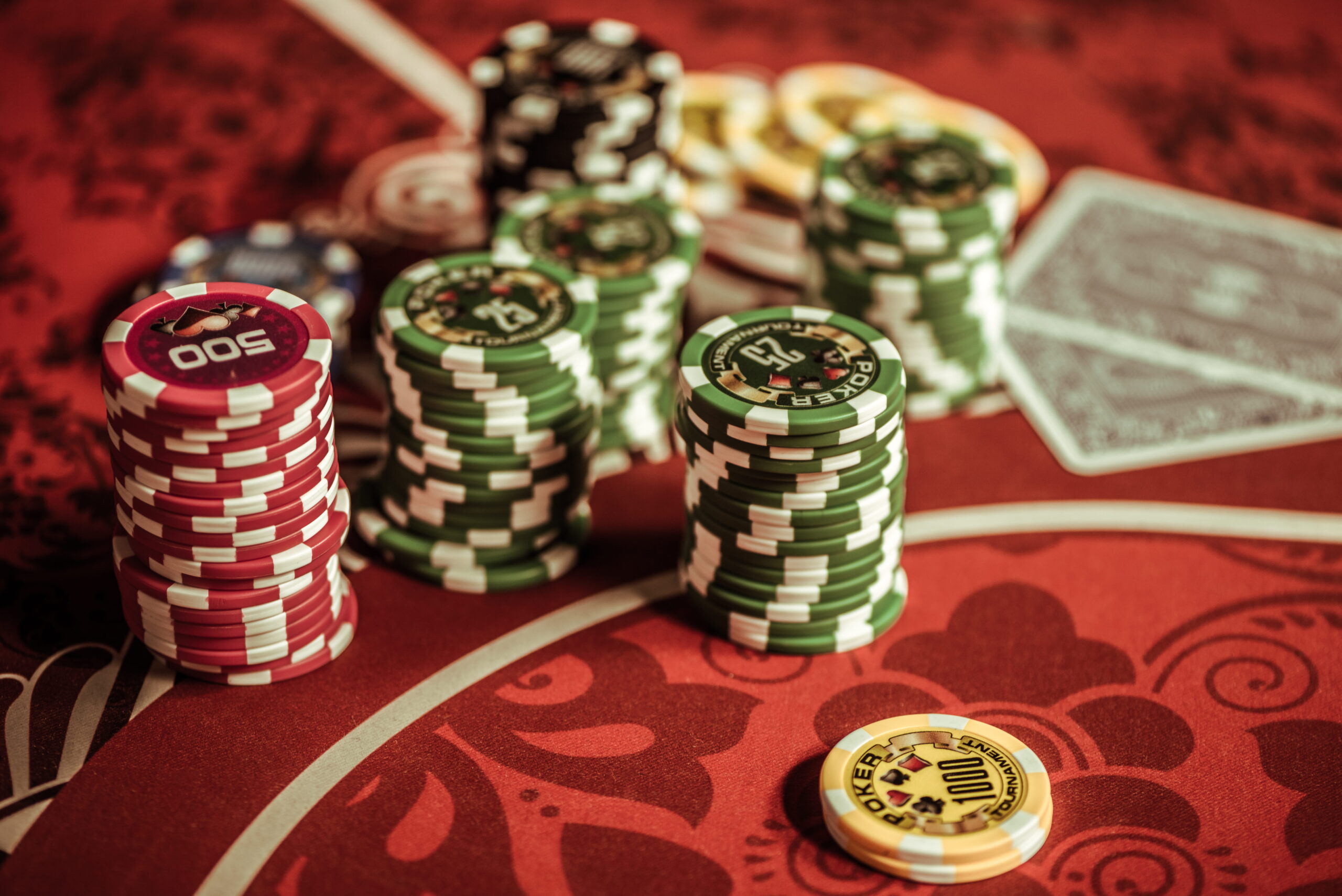
At its core, a coin flip is the universal shorthand for resolving disputes, making snap decisions, and testing raw fate. With just two possible outcomes—heads or tails—it represents the ultimate binary choice. It is no surprise, then, that coinflip gambling has evolved from simple tavern wagers between friends into a multi-million-dollar pillar of the modern digital betting landscape, particularly within online casinos and the cryptocurrency gaming sector.
While it appears to be the purest form of gambling on earth, a deeper look reveals a fascinating intersection of probability theory, human psychology, and digital innovation.
The Origins and Evolution of Coinflip Betting
Humans have bet on the toss of a coin for millennia. Ancient Romans played Navia aut Caput (“Ship or Head”), where coins featured the head of Janus on one side and a ship’s prow on the other.
In the modern era, coinflip gambling has undergone a digital transformation. Traditional betting relied on physical coins tossed into the air. Today, cryptocurrency platforms and online skin-betting sites have popularized automated, lightning-fast digital coinflips. Players can wager digital assets like Bitcoin, Ethereum, or custom platform tokens, settling bets in milliseconds with provably fair algorithms guaranteeing that the house is not manipulating the outcome.
The Mathematics: Understanding the Odds
To the untrained eye, a coin flip is a 50/50 proposition. However, professional gamblers and mathematicians look past the simple binary and analyze the underlying mechanics, house edges, and statistical probabilities.
True Probability vs. House Edge
In a theoretical vacuum, a fair coin lands on heads 50% of the time and tails 50% of the time. The mathematical probability (£P£) of either outcome is:
££P(\text{Heads}) = 0.50 \quad \text{and} \quad P(\text{Tails}) = 0.50££
However, commercial gambling platforms rarely offer a true 50/50 payout without a catch. To ensure profitability, operators introduce a house edge, typically manifested through a commission (known as “juice” or “vig”) or slightly adjusted payouts.
| Platform Type | Payout Structure | Implied Probability | House Edge |
|---|---|---|---|
| Peer-to-Peer | Winner takes all (minus small fee) | 50.0% | Variable (fee-based) |
| Traditional Casino | Pays 1.95 to 1 on a £1 bet | 51.28% | ~2.56% |
| Provably Fair Crypto | Varies by smart contract | 50.0% to 50.5% | 0% to 1.0% |
The Gambler’s Fallacy
One of the most common mathematical misconceptions in coinflip gambling is the Gambler’s Fallacy. If a coin lands on heads five times in a row, many players assume that tails is “due.”
Statistically, a standard coin has no memory. The probability of the coin landing on heads on the sixth flip is still exactly 50%. Believing that past independent events influence future independent events leads to catastrophic bankroll depletion.
The Physics: Is a Coin Toss Really 50/50?
While mathematicians treat coin flips as fair 50/50 events, physicists have discovered that human coin flips are actually biased.
In a landmark study, a team of mathematicians and physicists led by Professor Persi Diaconis at Stanford University demonstrated that physically flipped coins land on the same side they started on roughly 51% of the time.
When a human flips a coin, it wobbles slightly through the air, spending marginally more time with the starting face pointing upward. While a 1% edge sounds negligible, over thousands of wagers, it represents a significant statistical advantage for anyone paying close attention to how a coin is held and launched.
The Psychology Behind the Flip
Why do people find coinflip gambling so utterly addictive? The answer lies in the human brain’s reward circuitry.
- The Speed of Gratification: Unlike poker, which requires strategy and patience, or sports betting, which takes hours to resolve, a coin flip delivers instantaneous results. This rapid feedback loop triggers quick spikes of dopamine.
- The Illusion of Control: Despite being entirely luck-based, players often develop rituals—blowing on the coin, flipping it with a specific thumb motion, or choosing “lucky” sides—believing they can influence the physics of the toss.
- Chasing Losses: The simplicity of the game makes it dangerously easy to attempt to win back lost money instantly by simply doubling the bet size on the next flip.
Strategies Used in Coinflip Gambling
While no strategy can overcome a mathematical house edge over the long term, gamblers have utilized various betting systems for centuries to manage their bankrolls during coinflip streaks.
- The Martingale System: Doubling the bet after every loss. The theory is that a single win will recover all previous losses plus a profit equal to the original stake. (Risk: Table limits or bankroll exhaustion during a long losing streak).
- The Paroli System: A positive progression system where the player doubles their bet after a win, capitalizing on hot streaks while minimizing risk during cold ones.
- Flat Betting: Wagering the exact same amount on every single flip, which maximizes playtime and protects the bankroll from rapid liquidation.
Frequently Asked Questions (FAQ)
1. Is online coinflip gambling rigged?
Reputable online platforms use Provably Fair cryptography, allowing players to independently verify that the outcome of every coin flip was generated randomly and was not altered by the house. However, players should always use licensed and audited websites to avoid scams.
2. Can you make a living playing coinflip games?
No. Because coinflip games either feature a built-in house edge or a peer-to-peer platform fee, the expected value (EV) for the player is negative over the long term. It should be viewed strictly as entertainment, not as a reliable income source.
3. What is a “Provably Fair” coin flip?
It is a cryptographic system that uses algorithms (such as SHA-256 hashing) to ensure that neither the player nor the casino knows the outcome of the flip beforehand, and that the casino cannot manipulate the result after the bet has been placed.
4. Do physical coin tosses favor one side?
Yes, slightly. Studies show that a coin is more likely to land on the same face it started on (the side facing up before the thumb launches it) roughly 51% of the time due to slight precession in the air.
Coinflip gambling strips wagering down to its absolute essence: pure risk and reward wrapped in a binary package. Whether enjoyed as a fast-paced crypto game or a casual wager between friends, its deceptive simplicity masks deep layers of probability, physics, and human psychology. Understanding the true odds, recognizing the house edge, and maintaining strict bankroll discipline are the only true “strategies” for anyone stepping up to the metaphorical coin toss.
Learn about Bitz and coin flip gambling, including how each round works, what to consider before playing, and safer wagering habits.